From Brahmanbaria to Barcelona: How Z Tech Rewrote the Story of Rural Connectivity
By Mohammed Samiul Islam · Sep 11, 2026, 6:20 PM
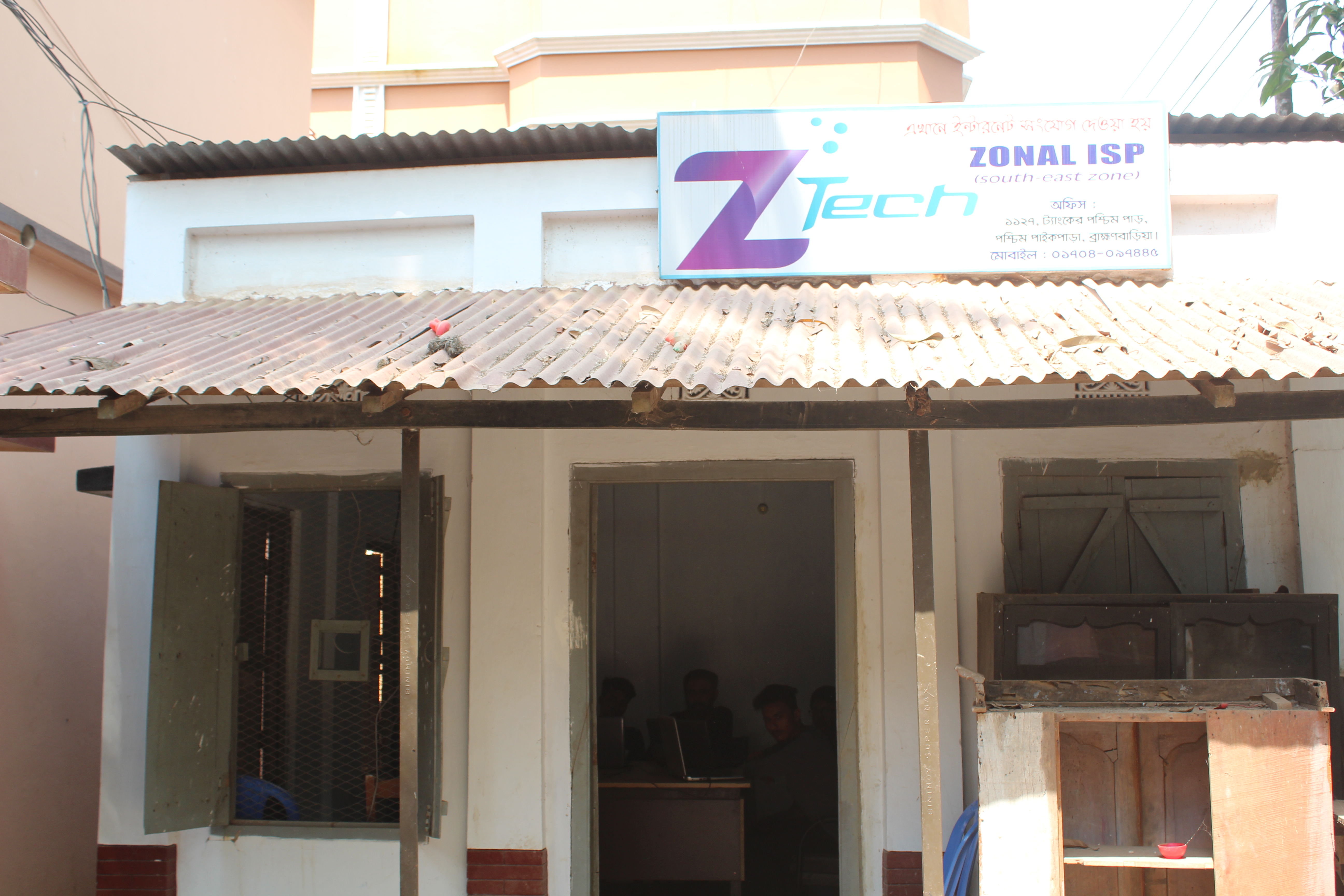
Every startup is a story. Ours began in March 2019 in the rural, underserved communities of Brahmanbaria, Bangladesh. We didn’t launch with massive venture capital or a sleek glass-walled office in a metropolis. We started as a modest proprietorship ISP startup named Z Tech, driven by a bold, simple vision: delivering low-cost, high-impact internet solutions to low-income and underprivileged rural communities using a hybrid of wired broadband and 5G-compatible Wi-Fi technologies. Here is our journey from a localized rural internet provider to a Public Limited Company (PLC) expanding into cutting-edge research and software services. Journey – After completing my MBA at Dhaka University, I wanted to harness tech enterprise for real social good. Traditional ISPs routinely overlooked rural villages because low-income populations were seen as unprofitable. We set out to challenge that narrative by securing our ISP license from BTRC and piloting Z Tech in Brahmanbaria. Inspired by GSM network topologies, we introduced a decentralized network farming model. We extended wired connections up to community hubs or public spaces, then deployed Wi-Fi access points to dramatically lower infrastructure costs while expanding reach. Managed via a dedicated app, we launched flexible "pay-as-you-go" micro-packages starting as low as 10 BDT (less than $0.10 USD) per day for unlimited usage. Challenges – The path was filled with formidable obstacles: • High Capital Requirements for Infrastructure: Developing a single community network covering a 2,700-meter radius required around $3,151 USD. Financing each node out-of-pocket during our early phase was a heavy lift. • Overcoming Skepticism: Skeptics doubted whether a low-cost model serving rural populations could ever be commercially sustainable. • Policy & Tax Barriers: Operating in rural areas meant navigating high spectrum fees, taxation, and right-of-way challenges—issues where policy historically favored massive urban operators over rural innovators. • Evolving Beyond Bandwidth: As connectivity took root, we realized that providing data wasn't enough. Our users needed specialized software tools and digital platforms to truly participate in the digital economy. We had to rapidly transform from a bandwidth supplier into a full-fledged software service provider and research-driven technology entity. Learning –
- Community Inclusion Creates Sustainability: By inviting local community members into our business through profit-sharing (giving 15% back to local vendors), we turned residents into brand ambassadors and network custodians. This allowed our pilot project to reach full sustainability in just 8 months.
- Connectivity Unlocks Ecosystems: Low-cost data acts as a foundational utility. It drives measurable impact across healthcare, education, agriculture, transportation, security, and women’s empowerment.
- Local Innovations Gain Global Value: A hybrid connectivity model designed for a rural district in Bangladesh can serve as a blueprint for underserved regions globally—from South Asia to West Africa. The Heroes – Our growth was built on the backs of extraordinary community members, ecosystem champions, and global academic allies: • Local Entrepreneurs & Users: Grassroots heroes like Ms. Ekra, a student turned online merchant, and Ms. Bithi, a homemaker and new mother selling textiles over our network. They demonstrated how digital access alters life trajectories. • National Ecosystem Support: ICT Ministry and the Startup Bangladesh iDEA Project (2020 Winner) provided critical incubation, backbone support, and backing. • Global Catalysts & Partners: Mr. Md. Saiful Islam (Commercial Counsellor, Embassy of Bangladesh) enabled our international debut at the Asia Berlin Summit 2020. Following this, Dr. Pedro Fernandes from Madrid Polytechnic University Incorporated Z Tech as a case study in their university curriculum and initiated plans for a joint venture to deploy our network farming concept in Togo, West Africa. Spotlight: The MWC 2021 Panel Interview https://www.youtube.com/watch?v=x6ddsW2L6UI&t=340s If Z Tech’s story were a movie, the climax of its startup phase took place on the global stage at Mobile World Congress (MWC) 2021 in Barcelona, Spain. I was invited to serve as an in-person panel speaker on the Live Rural Connectivity Session alongside telecom leaders like Mark Allera (CEO of BT Consumer Brands), Nicholas Zibell (Chief Business Officer of KaiOS Technologies), Bernard Borghei (Co-Founder of Vertical Bridge), and John Stone (CTO of John Deere). Representing Z Tech and Bangladesh, I shared the stage to tackle the global coverage and usage gaps: From the Panel Floor at MWC 2021: • On Commercial Sustainability: I explained how Z Tech addresses the high cost of rural network deployment through a hybrid topology—combining fiber/wired backbones to central public spaces with localized Wi-Fi distribution. This approach significantly lowers deployment costs while delivering pay-as-you-go micro-packages at less than 10 cents a day. • On Social Impact & Women's Empowerment: I highlighted our dedicated community centers and subsidized rates specifically designed for women entrepreneurs, ensuring that digital inclusion bridges the gender gap in rural areas. • On Policy & Taxation: When asked what single most impactful action could accelerate rural connectivity, my answer to the global audience was clear: Finance and Taxation reform. Lowering the tax burden and redirecting infrastructure policy toward rural innovators is essential for closing the global digital divide. Sharing Z Tech’s model alongside industry giants proved that solutions originating from rural Bangladesh can inform global connectivity strategies. The Central Character – Despite the global stages and accolades, the central character of our movie isn't a founder or a board member. It is the Rural Digital Entrepreneur. It is the local vendor operating a network node, the student running an e-commerce shop from her home, and the smallholder farmer using low-cost data to check market prices. Their drive inspired our evolution. From our beginnings with 220 wired clients and 450 Wi-Fi users in Brahmanbaria, Z Tech grew into an APNIC member with our own public IP infrastructure, earned a seat among 35 global community judges at South Korea's Impact Collective, presented at MWC Barcelona 2021, and officially scaled into Z Tech PLC. Today, as a Public Limited Company, we go far beyond ISP cables—conducting research and engineering custom software solutions to ensure that no community, no matter how remote, is left behind in the modern digital age.
About the writer

A 25-year career spanning international trade, ICT infrastructure, and political engagement. Founded and scaled multiple enterprises from garment exports to rural internet connectivity. Recognized at BASIS, MWC Barcelona, and the Asia Berlin Summit — bridging private-sector technology expertise with national policy discourse.
Knowledge layer
Connected notes
Add evidence, a correction, or useful context. STS reviews every note before it appears; this is not a comment thread.
Loading notes…